New Program
Johannes Brahms
String Quartet No. 3 in B-flat Major, Op. 67
Maurice Ravel
String Quartet in F Major
Balourdet Quartet
In 2018 three members of what would become the Balourdet Quartet met at the Taos School of Music. Soon thereafter they met their violist at Rice University, and the Quartet was formed. After only a year together they began winning prizes, including the Nielsen International String Quartet Competition, New York’s Concert Artists Guild, the Fischoff National Chamber Music Competition, and the Cleveland Quartet award. They now are performing more than 70 concerts a season at such venues as Carnegie Hall, Wigmore Hall, and other well-respected chamber music venues.
Program Notes
“In the mind’s eye of a composer, one of the most beautiful mysteries is whether or not music exists in a specific time and place or completely in the realm of a creative fantasy. Both of these dazzling pieces by Brahms and Ravel borrow from images or scenes of rustic life and nature, but these images are all obscured in coloristic mirages and boundless sonic exploration. Do these works exceed the sum of their parts because of their imagery or the composers’ subjective expression and inner world?”
The Balourdet Quartet was the 2024 recipient of Chamber Music America’s prestigious honor, The Cleveland Quartet Award. This award recognizes and promotes a rising young string quartet whose artistry demonstrates that it is in the process of establishing a major career. The musical selections included in these notes are all performed by the Cleveland Quartet, and we have some comments as well by the founding violist of the quartet.
Johannes Brahms (1833-1897)
String Quartet No. 3 in B-flat Major, Op. 67 (1875)
Performance time: 35’
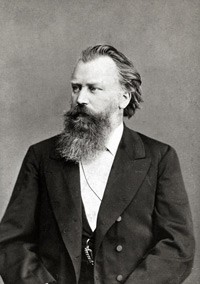
Johannes Brahms
In 1875, Georges Bizet’s Carmen premiered; Pierre-Auguste Renoir painted Woman at the Piano, on view at the Art Institute of Chicago; the Palmer House was rebuilt after the 1871 Chicago fire.
Brahms was all too aware of his musical predecessors, and struggled to compose music that he felt was worthy of this heritage. His musical heroes Haydn, Mozart and Beethoven had each written, respectively, eighty-three, twenty-three, and sixteen string quartets. Brahms published three (though he later admitted to having written and discarded more than twenty). He wrote the third, ours today, in the same summer that he was working on his First Symphony. This quartet is good-humored, sunny, and was his favorite.
The first movement opens with a hunting horn call, perhaps Brahms’s homage to Haydn and Mozart who also frequently used these calls. The mood of this movement is spirited and jovial. The next movement is more serious, with a lovely, quiet opening theme interrupted by a sudden dark passage before returning to the original melody. The third movement, full of agitato passion, features the viola singing out in full voice to the background of the other muted instruments.
The final movement is the musical climax of the quartet. It is a theme with eight variations, with a simple theme of great beauty. Each variation features one of the instruments—first the viola, then violin, then cello, and then cello and viola. The seventh variation features a return of the same horn call that opened the quartet, which emphasizes the fact that the first, third and sixth notes of that horn call make up the outline of the theme of this last movement as well. The final variation recalls the middle section of the first movement, and the final coda of this quartet combines the themes of the first and final movements in a brilliant finale.
Here is a profound and spirited performance of this work by the Cleveland Quartet. Apologies: each movement has its own link. I. Vivace; 2. Andante; 3. Agitato; Allegretto non troppo; 4. Poco allegretto con variazioni; Doppio movimento.
Maurice Ravel (1875-1937)
String Quartet in F Major (1902-1903)
Performance time: 15’
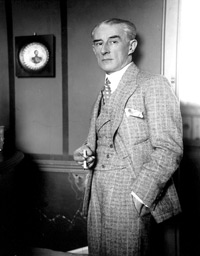
Maurice Ravel
In 1902-03, Gustav Klimt completed theBeethoven Frieze for the 14th Vienna Secessionist exhibition; Beatrix Potter published The Tale of Peter Rabbit, and Arthur Conan Doyle published The Hound of the Baskervilles; Ronald Ross received the Nobel Prize in Medicine for his work on the transmission of malaria.
Just as Mozart had his mentor in Haydn, so Maurice Ravel had his: Gabriel Fauré, with whom he studied at the Paris Conservatoire, and to whom he dedicated this quartet, noting in the musical score for all subsequent performers to see: “à mon cher maître Gabriel Fauré.” Ravel also was deeply drawn to Debussy, his music and its “impressionism.” But when Debussy ran off with Fauré’s mistress, Emma Bardoc, Ravel turned away from him. During his own lifetime, Ravel was celebrated as France’s greatest living composer, a brilliant orchestrator, colorist and innovator. His best-seller "Bolero" reflects the fact that he was born just a few miles from the French-Spanish border, and is filled with atmosphere, color, and experimentation with musical form (i.e., exploring the theme through reiteration by every instrument).
In 1889, Paris celebrated the centennial of the French Revolution by holding a World’s Fair. The theme of the fair was “exoticism,” and among the attractions was a Javanese gamelan ensemble. (The gamelan is a set of percussion instruments; mallets are used to strike bells, drums, xylophones.) Among those who heard the Fair’s gamelan were Claude Debussy, Erik Satie, and Maurice Ravel, who all were fascinated by its colors and incorporated them into their own music. In particular, Ravel used them in the second movement of this string quartet. But just how to make a string quartet sound like a gamelan ensemble? Ravel explored and exploited many techniques available to string players to make “colors,” such as by plucking the strings (pizzicato) for a percussive effect. These techniques, plus little flutters, trills and continuous runs across the four instruments’ combined low to high range, evoke a gamelan.
James Dunham, founding violist of the Cleveland Quartet, offers these comments about our work today:
“Asking a musician which is his favorite work invariably results in the seemingly evasive but truthful response: “the one I’m currently playing!” In the world of string quartets, the breadth and depth of the repertoire is spectacularly overwhelming and absolutely consuming. Even so, the Ravel quartet in F holds a rare and special place in my life…. During my senior year of high school I was a student at the recently opened Interlochen Arts Academy. The faculty string quartet had programmed the Ravel String Quartet and I was unprepared for my reaction to it. I was simply overwhelmed by the sweep of sonority, the sensation of colors constantly shifting, the flair and finesse as the instruments shared delicious harmonies with wit, compassion and ease. I had heard and played so much music even by age seventeen, but I had never felt so moved, so completely drawn in, and I believe this was the first truly pivotal moment of my life….I have now performed the Ravel quartet many times, always loving the calm grace of the opening theme over the cello’s simple F major scale, the luminous octaves between viola and first violin, the Spanish flavor of the pizzicato, the suspension of the middle section of the second movement, the haunting solos for each instrument in the slow movement and the great flair and daring of the dancing 5/8 meter of the Finale. I never fail to marvel at the invention of this great colorist, and I remain ceaselessly in awe of Ravel’s fantasy in this great and inspired work.”
Click here to hear the Cleveland Quartet perform the Ravel String Quartet.
Program Notes by Louise K. Smith
With thanks to Lucy Miller Murray, Melvin Berger, James Dunham and the Balourdet Quartet

Balourdet Quartet
Subscribe
Today!
Individual tickets may be purchased at the door (cash or check only) immediately before each concert.
All concerts are held at a private club just off Michigan Avenue in Chicago.
Call or email for more information
815-314-0681
office@ChicagoChamberMusicSociety.org